
Ensuring Clean Water for Our Cattle Amid Nearby Growth
One of the things I hear about our area most often is this: "Wow! It's incredible how much this part of the county has grown in the past 5-10 years!"
And it's absolutely true! Cherokee County is growing due to Metro Atlanta expansion and population growth, but the Hickory Flat area is growing especially rapidly due to a number of additional factors.
Recently, ground was broken on a new retail development very close to our property. Through the development process, the developer was granted the use of an existing pond as their retention pond. That same pond feeds the stream that our cattle have used since the farm came into existence! At the first heavy rain, this is what it looked like downstream from the construction site:
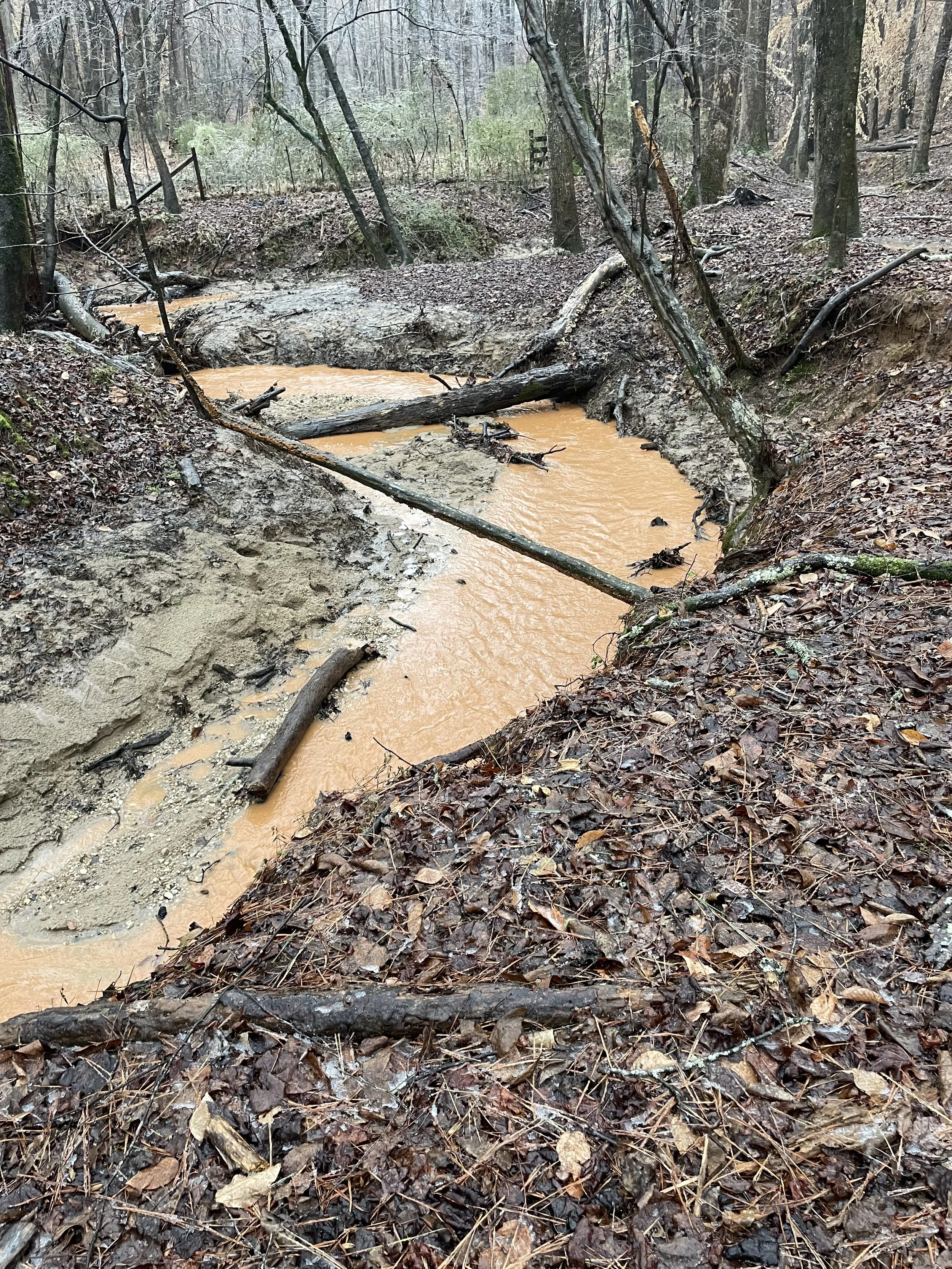
Red dirt washing down stream from the construction site.
Before this development began, I was already thinking about water supply for our animals. Last summer, the stream just about dried up due to drought conditions. So we needed to install a better, cleaner watering method. We also needed to start keeping track of water quality markers in the stream.
Installing Automatic Waterers
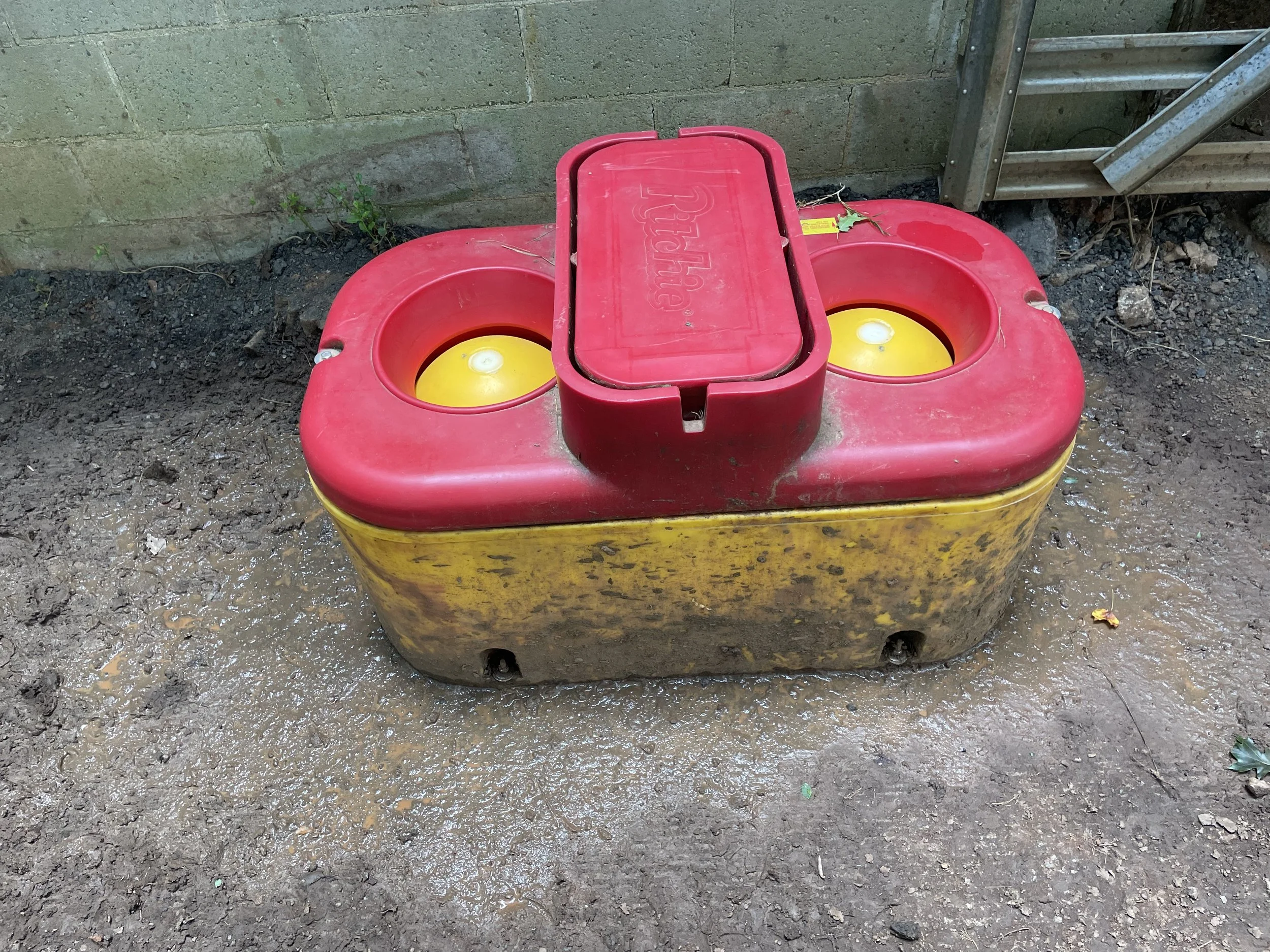
Automatic waterer with self-closing tops
Automatic waterer in use!
Last year, we started pursuing funding to help cover the costs of automatic waterers. Thankfully, our project was approved and we began work on them last fall. I’m so grateful to have these waterers installed for a number of reasons:
First, and maybe most important, the animals have constant access to clean, cool, fresh water, year round.
Second, the waterers stay clean. In our previous, open-top water troughs, debris, dirt, algae, and even small animals got into the water. During the hot months of the year, the water troughs require weekly cleaning, which is a significant undertaking! The new waterers have covers that close automatically when an animal finishes drinking, and they are insulated from hot and cold weather. This keeps out debris and small animals, as well as reduces algal growth from sunlight. We will still have to clean them occasionally, but they are mostly maintenance free!
Third, by having clean water close by, the cows spend less time IN the stream. When it’s super hot, they still go down to the water to cool off, but now that they don’t need to drink from the stream, they spend less time there, which helps reduce surface water contamination by the cows, as well as reduces their exposure to harmful chemicals from runoff.
Water Quality Monitoring
In addition to installing automatic waterers, we decided that we should learn how to monitor water quality. This spring, I earned certifications to monitor several chemical markers in the water, as well as monitor bacteria levels and macro invertebrate variety. As a science-y person, this is right up my alley! My daughter did the training with me and she’s enjoying the chemistry aspect of the testing that we are starting. Each month, we will measure things like dissolved oxygen levels, stream water pH, and presence of e.coli bacteria, to start building a picture of the water quality of our stream. We will also check quarterly for a variety of macro invertebrates, amphibians, and reptiles since biodiversity is an excellent indicator of habitat and water health.
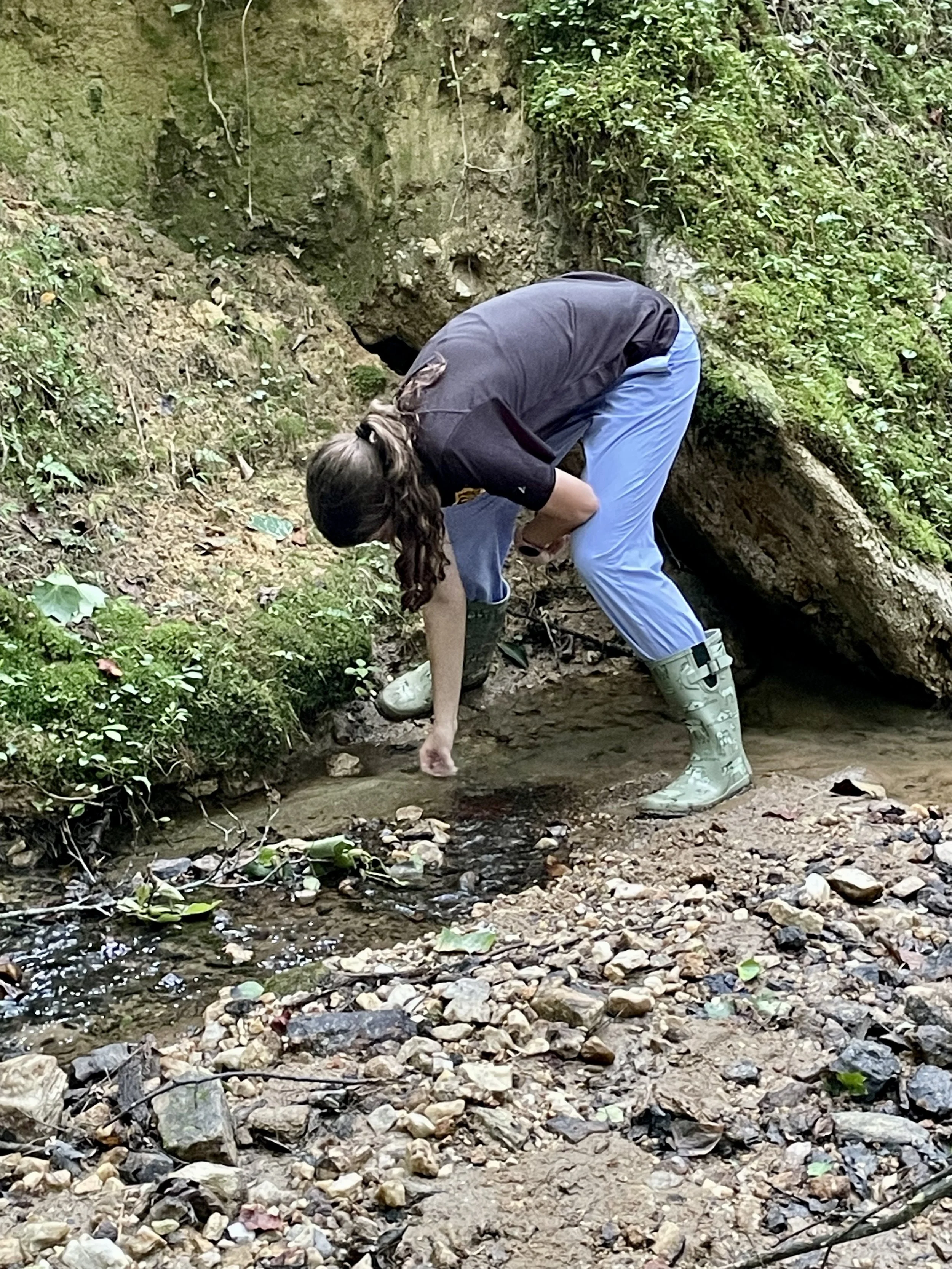
Collecting water samples
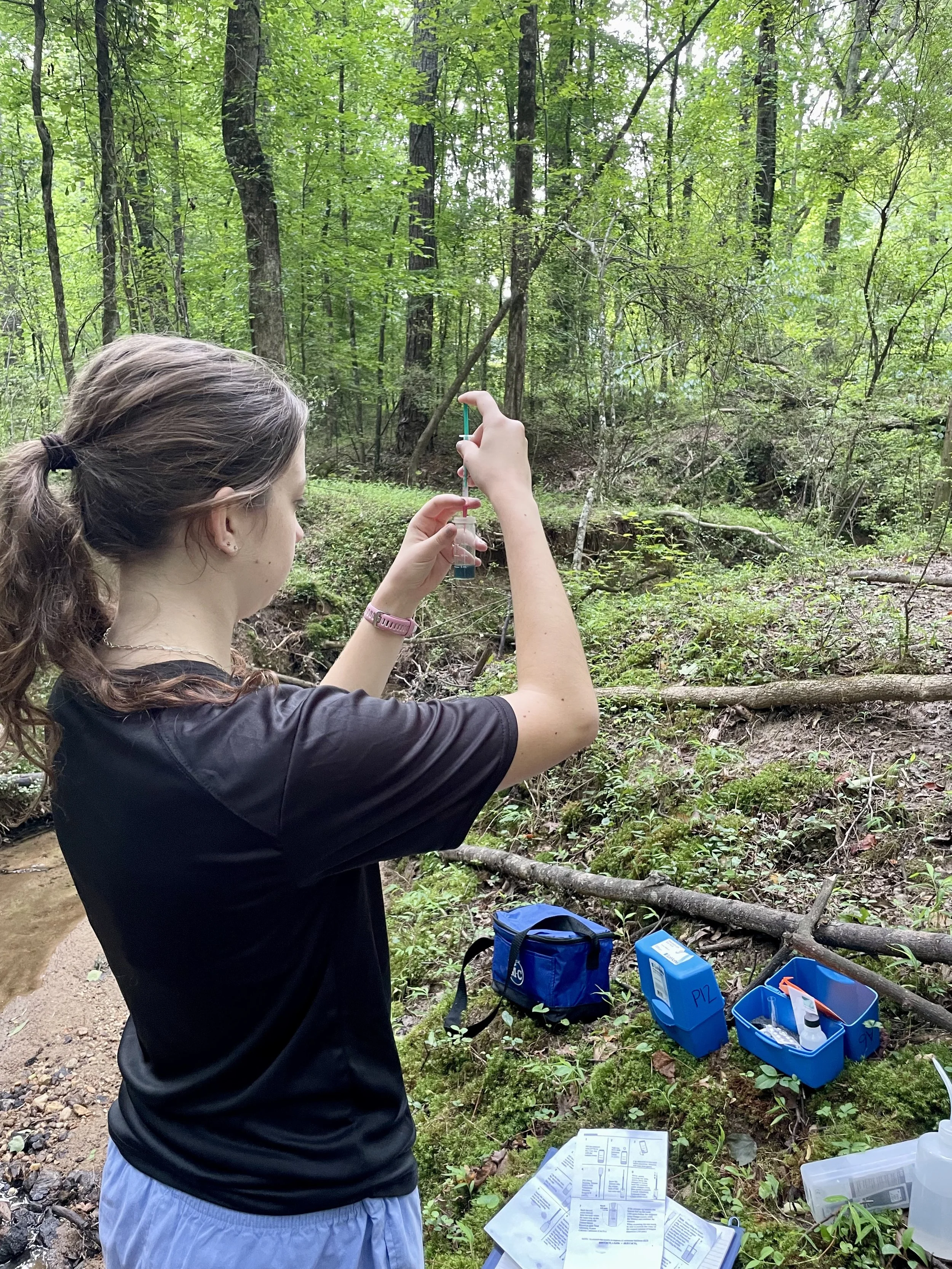
Testing for alkalinity
By having these baseline measurements, we can see if any unusual changes occur and take steps to identify the source of the changes. By keeping track of the changes, we can decide what’s best for the health of our animals in the long-run.